Want to see an example? WATCH VIDEO
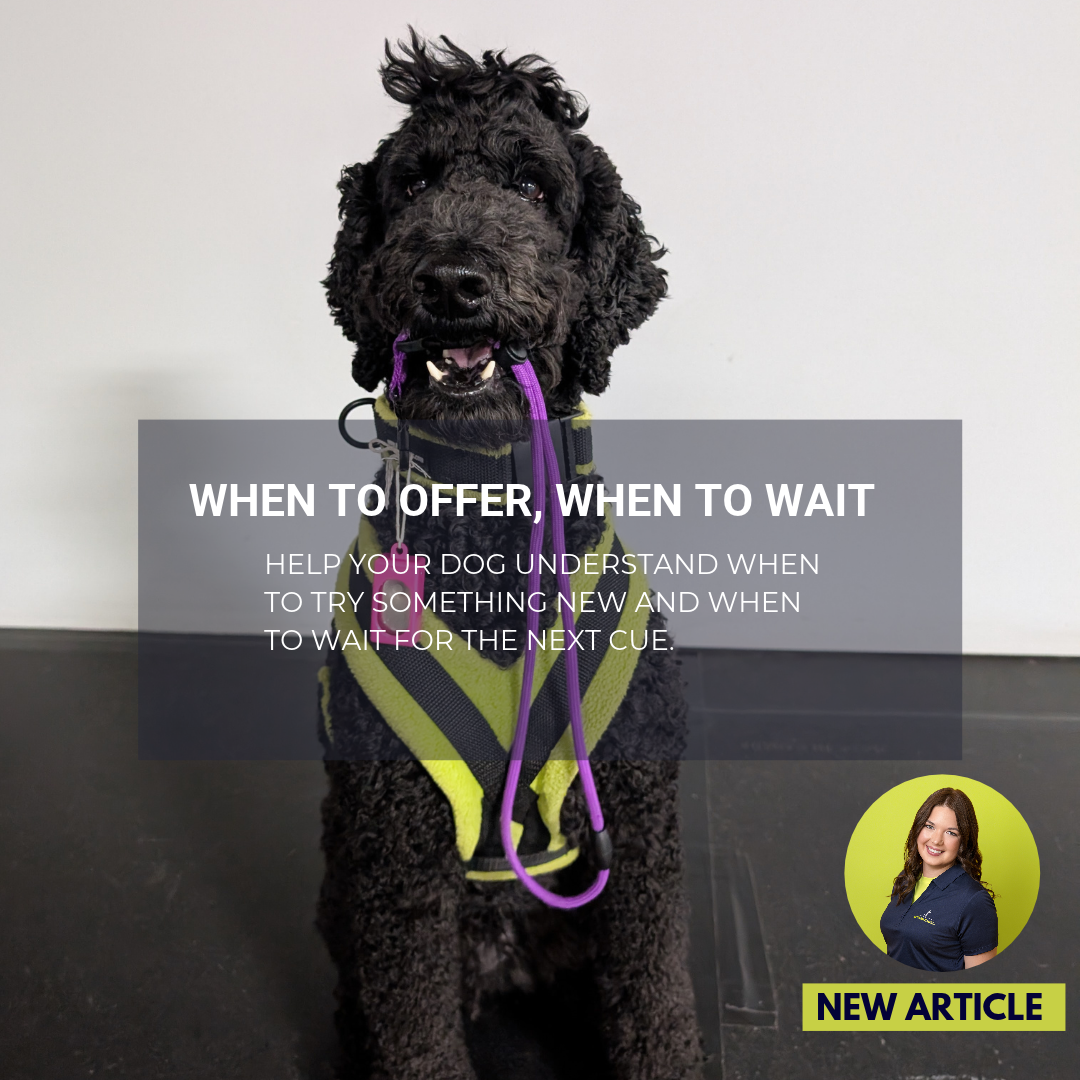
There are a few things I find helpful for training new skills quickly. Over the years, I’ve used many timed sessions to see how quickly I can teach a dog to perform the target behavior. Dogs that understand the key concepts of training and have strong micro-skills pick up new skills fast. Another thing that helps is working with a dog that knows how to offer behaviors so they can figure out the correct response. The problem is, we don’t want dogs throwing tricks at us all the time. So, how do they know when to offer behaviors and when to pause until the next cue?
Teaching Your Dog When to Offer Behaviors
You can teach your dog when to offer behaviors by changing the picture of the training session. Once I mark a movement I didn’t cue by saying “yes,” an experienced dog will usually get the message and start trying to figure out what I want. I make it even clearer by holding food in my hand during shaping and keeping my hands at my sides. The dog learns that this means we’re playing a shaping game.
If I’m giving cues the dog already knows, I usually put the food away or don’t have it on me at all. Otherwise, I make it obvious to the dog that I’m holding it differently than I would during shaping.
Why Does It Matter?
Dogs that keep offering behaviors without a cue can become a little chaotic. You might not be able to tell if the dog understands the cue or is simply guessing. Instead, I want to see the dog respond to the cue and then wait patiently. When the handler pauses, the dog waits instead of doing something else.
Since we do want the dog to guess and offer behaviors when we’re training something new through shaping, we have to make it clear to the dog which game we’re playing.
Amazingly, dogs learn the difference when we’re consistent with these concepts. Yes, it takes focus and practice for the person, but it’s a fun part of training.
