Train Your Dog The Moving Stand
There are different types of moving stands depending on what you’re working on and what your goal is. In general, the moving stand begins with your dog in heel position on your left side. As you move together, you give your dog the cue to stand, and your dog immediately freezes in the standing position while you continue forward motion and the dog holds the stand.
You might choose to use a hand signal or a verbal cue. You might pause after giving the stand cue and then leave, or give the cue and transition directly into moving away from your dog while they hold the stay. It depends on what you’re training for and the picture you want to create. Either way, the purpose of the moving stand is going from motion straight into a stand, without sitting or stepping forward. The dog then holds that position until you give a release cue, such as break, or another instruction.
When we train the moving stand, we’re not just training a behavior. We’re also training the dog’s muscles, balance, and body awareness. Moving into a balanced stand very quickly takes practice and strength. Ideally, the dog lands in a nice square stand with all four feet on the ground and weight distributed comfortably so the position can be held as a stay.
If your dog moves briskly beside you during heeling, going straight from a trot into a stand takes repetition and thoughtful training. This is where micro-skills come in (an important part of Trickovation). Micro-skills are the small foundation pieces that build into larger, polished behaviors.
Start With the Foundations
Before attempting a moving stand, your dog must clearly understand the stand position itself. I’m not going to cover every technique for teaching stand here, but I often use a lift-stand method where the front feet stay planted and the rear feet step up into position. I train this with a nose target to the ground to create a precise pop into the stand, then gradually transition the dog from targeting low to holding the head up in a clean stand. Although the moving stand is different because the dog doesn't sit first, knowing how to stand from the sit is still a helpful foundation.
Early Micro-Skills for the Moving Stand
One of the first micro-skills is simply learning to move and then freeze into a balanced stand.
You can lower your hand with a treat and have your dog follow it for a few steps. Then hold your hand still. The moment your dog settles into a balanced stand, mark with yes and feed.
Try the same idea after guiding your dog in a small circle. When the circle finishes and the feet land evenly underneath the body in a stand, mark (say yes) and reward. These exercises teach the dog how to arrive in balance from motion.
Next, walk with your dog at your side and pivot slightly in front of them rather than stopping directly. Mark and feed while the dog is still standing before they default into an automatic sit. Dogs who have practiced many auto-sits will expect to sit when you stop, so this step helps clarify that stand is now the correct answer. The dog will learn the difference based on your cues. Eventually, you won't pivot. That's just a hint to begin with.
Adding Movement Challenges
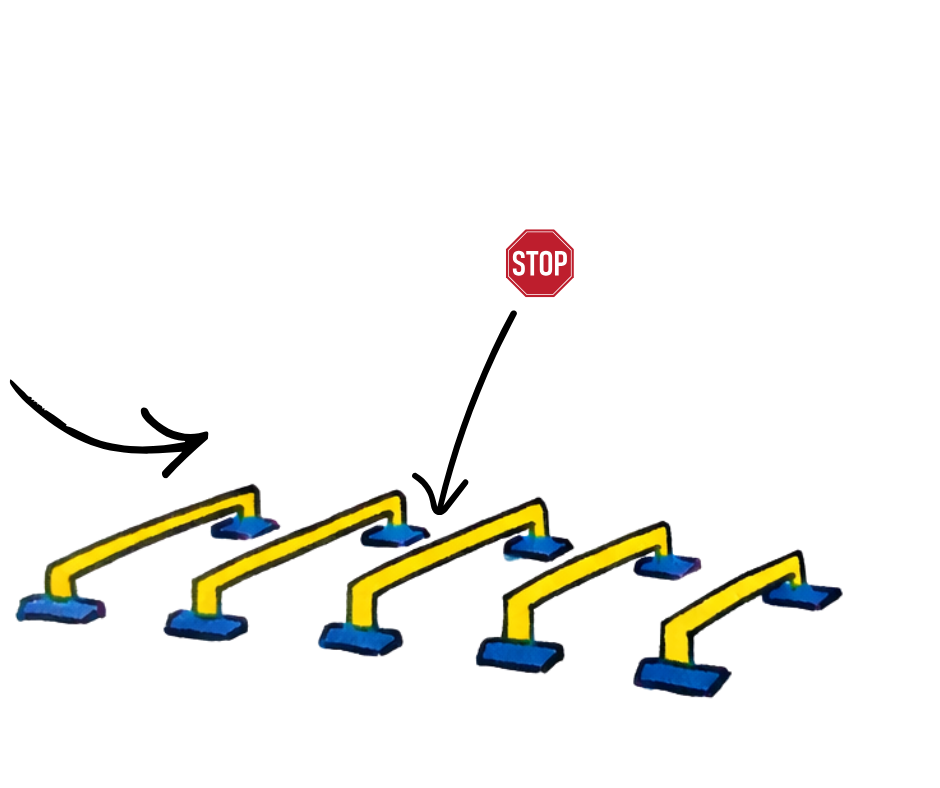
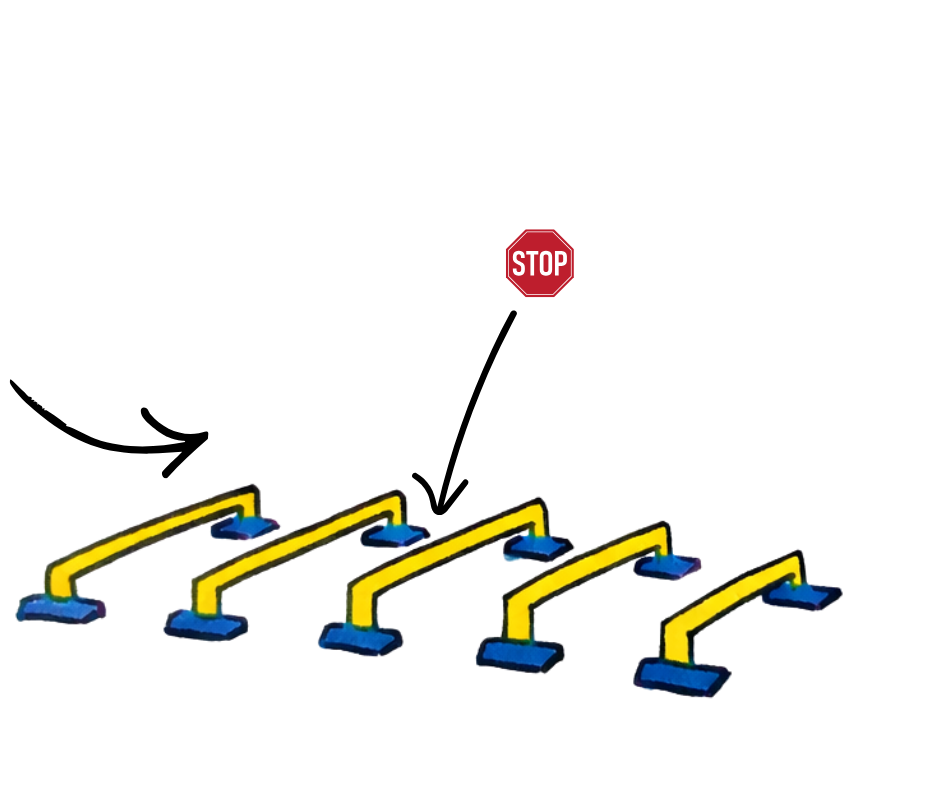
Cavaletti are another excellent tool for building the moving stand. As your dog trots over evenly spaced poles, randomly cue stand. The dog must freeze in balance between the poles, which builds speed, strength, and body awareness.
You can:
Walk beside your dog as your dog trots over the poles and cue the stand
Recall your dog over the poles and cue the stand while your dog is moving and you are at a distance
Practice walking away after the stand and returning while the dog holds position
Once the stand is quick and balanced, the next step is proofing. Practice in new locations and add thoughtful distractions.
Try:
Holding a toy and dropping it as you walk away, as your dog holds the stand.
Holding food and releasing it to the ground as a distraction.
Practicing in everyday environments, not just training spaces
Reliability comes from mixing the skill into real situations, so the dog understands the cue no matter where it appears.
A Strong Moving Stand
With consistent practice, you’ll develop a moving stand that is fast, balanced, and dependable. Whether your goal is competition, precision training, fun practice, or Trickovation, the moving stand becomes a powerful example of how micro-skills build into polished performance.
Like many things in training, the beauty isn’t just in the final behavior, it’s in the thoughtful process that creates it.