
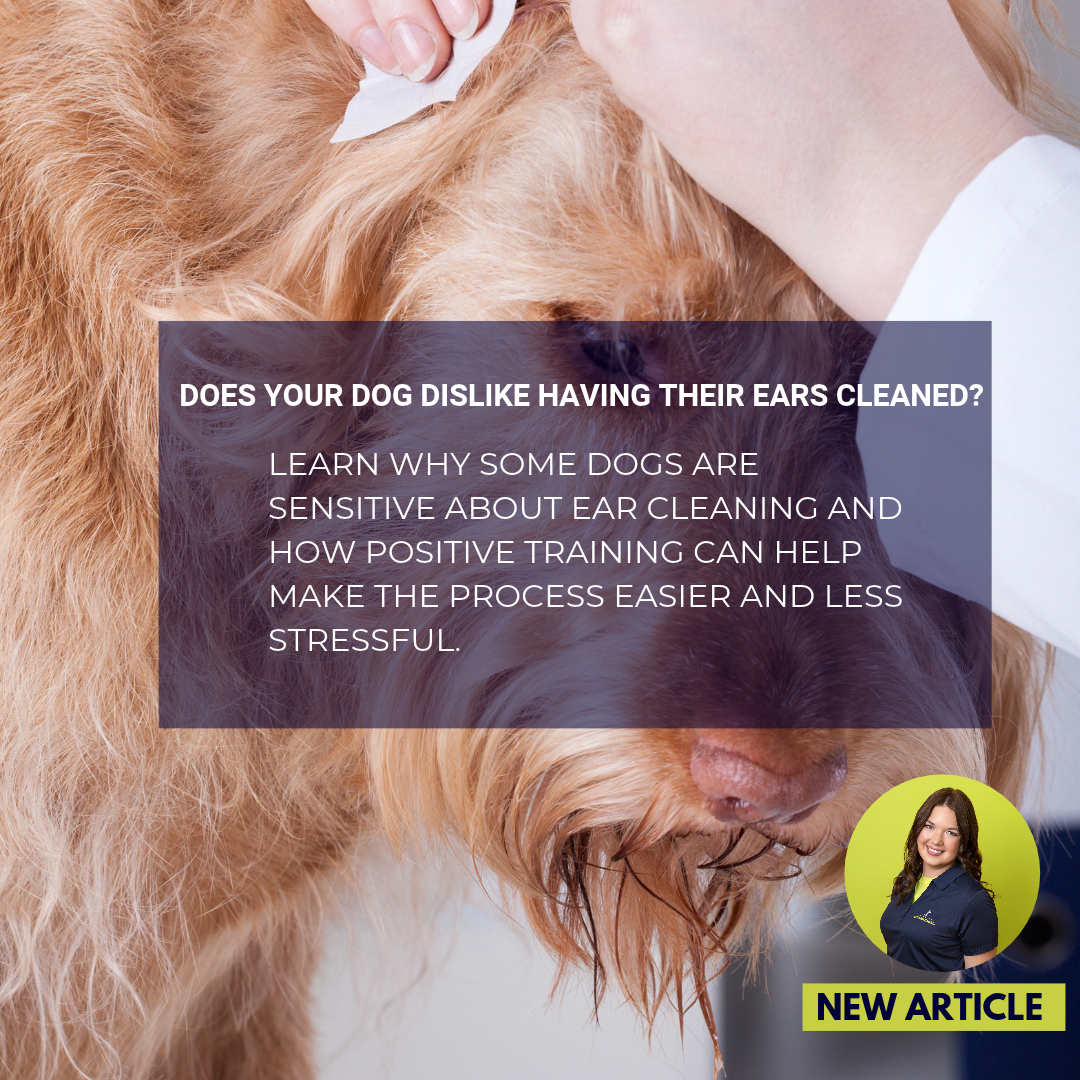
Not every dog likes to have their ears cleaned. While many dogs aren’t bothered by ear cleaning, some show behavioral changes, from mild stress to growling or even trying to bite. If your dog disappears into another room the moment you pick up the ear cleaner, you might wonder what you can do to make the process easier.
If your dog is groomed professionally, chances are their ears are cleaned as part of the process. At MJ’s Pet Training Academy, ear cleaning is included with all grooming and bath appointments, with only a few exceptions. Ear health is an important part of grooming that shouldn’t be overlooked in the salon or at home.
Dogs with long, drop ears, such as American Cocker Spaniels, English Cocker Spaniels, Basset Hounds, Springer Spaniels, and many doodles, may need extra ear care. Keeping the ears dry, cleaning them as recommended, and checking for any problems can help keep them healthy. Dogs such as German Shepherds and Huskies, which have less hair covering their ear canals and better airflow, may need less ear maintenance overall, but they should still have their ears checked regularly and cleaned as needed.
Keeping the ears dry and clean is only one part of ear health. Other factors, such as diet, allergies, and genetics, may play a role. Dog owners should talk with their veterinarian about how best to care for their dog’s ears between grooming visits and what to watch for.
Why Some Dogs Don’t Like Having Their Ears Cleaned
Dogs with frequent ear infections are commonly more sensitive about having their ears cleaned. These dogs may associate discomfort with the ear-cleaning or treatment process, but there are other reasons as well. Some dogs are more sensitive to handling than others, which can make them more stressed about having their ears cleaned. Dogs with a history of skin conditions or frequent ear matting can also be more sensitive about their ears.
We don’t always know the exact reason a dog is sensitive about their ears, but professionals can help owners learn what they can do to help.
One of the best ways to prevent a dog from becoming fearful of having their ears cleaned is to prevent discomfort. One example is using the right kind of ear cleaner and making sure it is at the right temperature. If the ear cleaner is too cold, for example, you can place the closed bottle in warm water to bring it to room temperature.
Checking your dog’s ears regularly can help make it part of their routine. Lifting the ear and looking inside without cleaning takes only a second and helps you notice any concerns while teaching your dog that it’s just part of the routine.
This is only for dogs at the prevention stage, when they don’t have any concerns about ear cleaning. Never force this if your dog is already showing signs of stress, fear, or aggression. In that case, work with a professional. If your dog suddenly becomes sensitive about having their ears touched, have your veterinarian check for pain or other medical concerns right away.
For Dogs That Are Afraid
You can’t trick a dog out of being afraid. If you try to baby talk and feed a nervous dog while continuing with something that frightens them, the dog may soon learn that your baby talk and treats in the presence of ear cleaner predict something uncomfortable. Instead, the dog should learn to feel comfortable with different aspects of ear cleaning away from the actual ear-cleaning process.
That means training the dog to become comfortable with having their ears touched, looked in, gently wiped with a dry cotton ball, and so on. Doing this away from the grooming process is important. To understand how to do this, in what order, and how to do it safely, you’ll need to work with a professional who specializes in this type of behavior.
The dog will likely need their ears cleaned for real during the training process. That means that while you’re working hard to build the dog’s trust for weeks, at some point, the dog may still need to have their ears cleaned.
This can cause a major setback in training if you do it without a plan. Instead, we can use a separate cue or setup, so the training still holds its promise to the dog, while allowing us to do what we need to do for their health. A behavior professional should guide this to minimize stress and keep everyone safe.
As the dog becomes more successful, the line between real ear cleaning and practice begins to fade until it’s gone.
With the right professional support, dogs can learn to tolerate ear cleaning without the stress, even if they previously showed signs of fear.
