
Dogs should learn to listen even when they aren’t on a leash, but one common mistake can confuse them. Whether your dog is off-leash in a fenced-in yard or play area, or you plan to take your dog to safe areas where being off-leash is allowed, you’ll want to set your dog up for off-leash success right from the start. Removing the leash is a must if you plan to compete in obedience with your dog. It’s also a safety skill for all dogs to practice just in case the leash is accidentally dropped. Training your dog to stay with you off-leash takes a lot of work, but one big mistake many people make is easy to fix.
The leash test is a simple test you can try with your dog if you have a fenced-in yard where your dog is safe off-leash. In a securely fenced-in area, remove your dog’s leash and stand quietly. Don’t give your dog any cues or hints. What does your dog do?
Some dogs will stay right next to you. Other dogs will immediately bolt and go into full zoomie mode. Others will casually move away to sniff. None of these responses are wrong if you haven’t taught your dog a cue to go, but you do need to think about what leash removal means to your dog. If your goal is to train your dog to focus on you without a leash, teach your dog that removing it gives them the best chance to earn reinforcement. Taking the leash off doesn't mean they can run unless you tell them to.
First, decide what it means when you take the leash off, and how you will tell your dog when they are free to go. Instead of letting the act of removing the leash become the cue to go, use a verbal cue or signal. Once your dog understands this, they will remain with you once you take the leash off until you say otherwise.
If you use the cue “ok,” for example, your dog would remain next to you after you take off the leash until you say “ok.” Once you choose a cue that gives your dog permission to go, try rewarding your dog highly for focusing on you off leash. Taking the leash off gives your dog the chance to earn some of the best rewards while you’re training. You can practice this both inside and in a fenced-in area. Start in the living room or kitchen where there are fewer distractions.
Prepare a few high-value treats. Those are the ones your dog is very willing to work for. Also, grab a training toy. These are toys that you use for engagement games with your dog, such as tug. Call your dog over and attach the leash. Sit or stand calmly with your dog. Then remove the leash and feed your dog for attention. Wait for more attention, and treat again. This part is easy. Your dog likely knows you have treats available. Give the “ok” cue and ignore your dog. If your dog keeps trying to get your attention, you can walk away. Do this a few times. Leash-off means focus and earn a reward; “ok” means you’re free to go. Alternate between treat rewards, tug games, and praise.
Try it in a more distracting area once your dog understands. You might move to the fenced-in yard. Training sessions should be short, and you should build on this over a few days. Remember that every time you take your dog’s leash off, your dog should stay with you until you say “ok.” Don’t forget about the rule you’ve put in place. This is the first step toward a dog that understands off-leash doesn’t mean take off. Again, you should still practice where it’s safe and your dog is enclosed, because this is only one part of off-leash training.
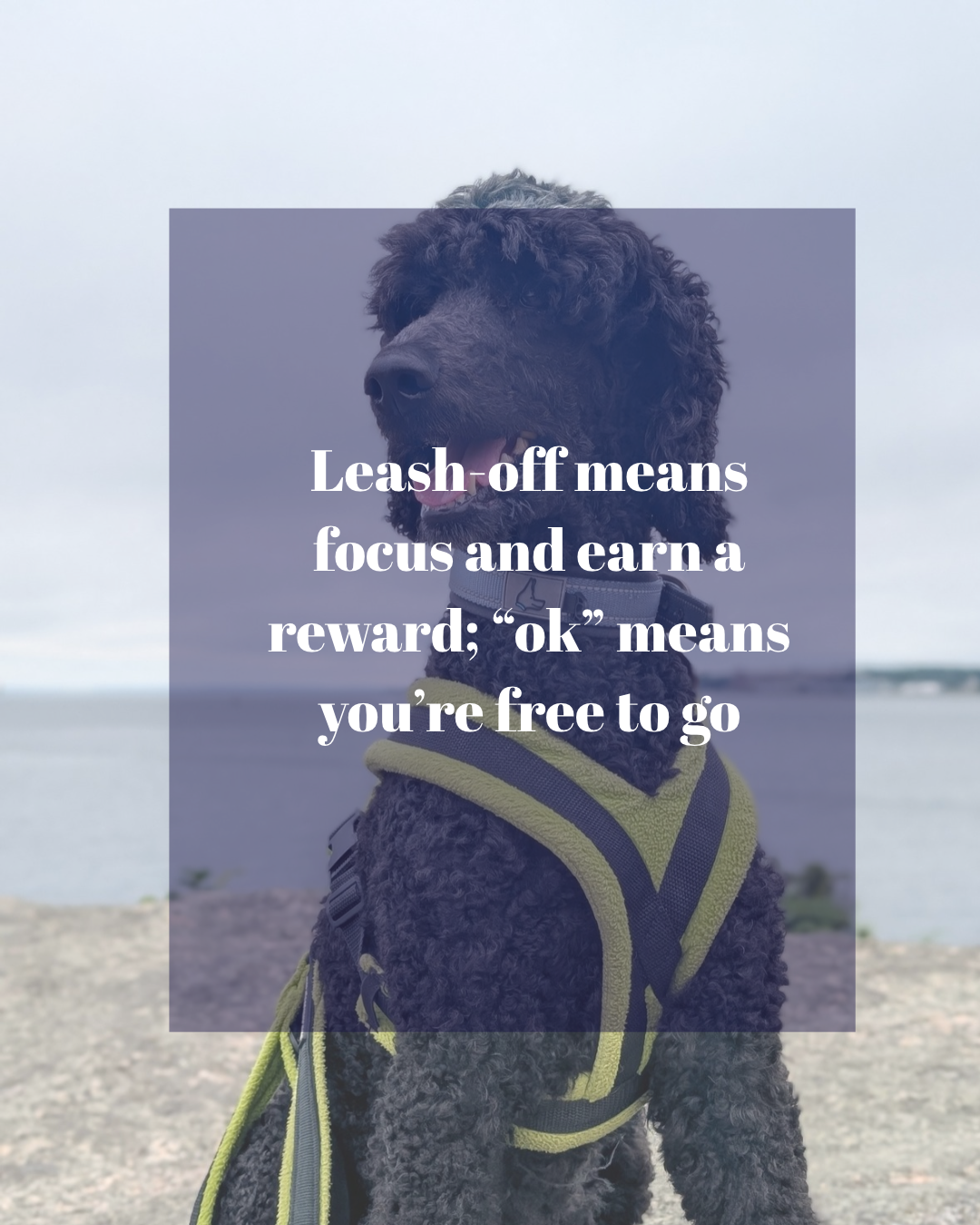
You won’t always have to reward your dog for staying with you until you say “ok” in the yard, but you should sometimes. We often take our dogs’ leashes off when we want them to go. You take your dog to play with a friend’s dog and remove the leash so your dog can run. You bring your dog home from a walk, go through the gate, remove the leash, and your dog runs off into the yard. That’s fine, but one simple cue changes what your dog understands. The leash doesn’t mean go; you saying “ok.” does.
Some dogs also run away when their owner picks up the leash to take them out. There are several reasons for this. It might have become a game in puppyhood, or the leash itself is too heavy for the dog. Uncomfortable and heavy equipment can make “getting dressed” aversive for some dogs. Small dogs also tend to do this. Being reached over can be uncomfortable.
Another leash-based training exercise is teaching dogs to get dressed on cue. When possible, smaller dogs benefit from learning to hop up onto a raised surface for this. Make sure the equipment you’re using is appropriate for your dog first. Is it comfortable? Is anything rubbing? Is the size correct? Practice putting your dog on a leash and reward your dog. Then remove the leash and say “ok.” It’s important to work on this when you’re not actually going anywhere. You can also drop a few treats as you attach the leash.
If your dog has strong feelings about putting on the leash, you might need a professional trainer who uses evidence-based techniques.
Clear, consistent cues can help your dog learn. If leash removal means running sometimes but not other times, how will your dog know the difference? A clear cue to go helps here. When you put the leash on, make it a positive experience for your dog, and consider what might make your dog avoid it in the first place.
