What Chickens, Rabbits, and Other Animals Have to Do with Dog Training
If you’ve ever walked into a room full of people who all seem to know each other while you’re the outsider, you know the feeling of almost wanting to turn around and walk out. Unless you’re naturally extroverted, it can be a lot to process, and that’s how I felt walking into a conference in the spring of 2013.
In my early twenties, I could barely budget for one day of the conference, which spanned a long weekend. I had recently opened my business and had a lot of new obligations to navigate. I didn’t want to miss one particular workshop: chicken training with Dr. Robert Bailey, a legendary animal trainer whose work helped shape modern positive reinforcement training. I showed up on the final day. It seemed like everyone else had known each other for much longer than the weekend as I found a seat for the first lecture of the day.
It wasn’t the largest conference of its kind, but it was one of my first. To be honest, I hadn’t attended many large events at that point in my life. I didn’t grow up going to concerts or big sporting events. Needless to say, I felt lost.
The first part of the conference that day is a blur, but I’m confident I could map out the chicken training workshop area, table by table.
The moment I carried the chicken I would train from the cage in the back of the room to the long table, my tunnel vision clicked on. Nothing else mattered as I positioned the cup of food as instructed and taught the bird to peck at a target. I forgot that I was standing in a room with some of the top trainers in the field, including Bob Bailey. My nervousness shifted to complete focus as the chicken and I communicated through precise timing and reward delivery.
I barely noticed Bailey moving around the room, stopping to watch each participant. Later, after the chickens had been put away, we had the opportunity to talk with him and take a photo. I wish I had asked a question, but much of what I wanted to know had already been answered through the training itself. I may not have been able to articulate what I wanted to understand about the systems he built, the way he trained, or the way he thought, but somehow the workshop had already provided more than enough to stay with me .
Looking back, I think that day answered a question I hadn't yet learned to ask: Why do so many of the best dog trainers spend time training animals that aren't dogs?
The answer, I discovered, goes beyond the reason most trainers will give.
If you’re not a professional dog trainer, you might not know why so many trainers who are serious about improving their skills also work with other species. While dogs have been selectively bred to work closely with humans, other animals don’t share that same relationship. Dogs can sometimes be surprisingly forgiving of imperfect training. Chickens, rabbits, and many other species are not. When you want to evaluate your timing, your hand position, your reward placement, or whether you’re raising criteria too quickly or too slowly, training an unfamiliar species reveals your own mechanics in a way dogs often won't. It becomes a way of refining the trainer as much as teaching the animal. I would argue that it's much more than that though.
Long before I found myself standing in a room full of chickens and professional trainers, I had already been practicing with animals other than dogs. I became serious about marker training sometime around high school. At the time, I had a few pet rabbits while attending an agricultural high school as an FFA member. I remember sitting on the floor teaching each rabbit to touch a target stick and spin in a circle. Even before that, I taught our family horse tricks and, of course, trained the family dogs.
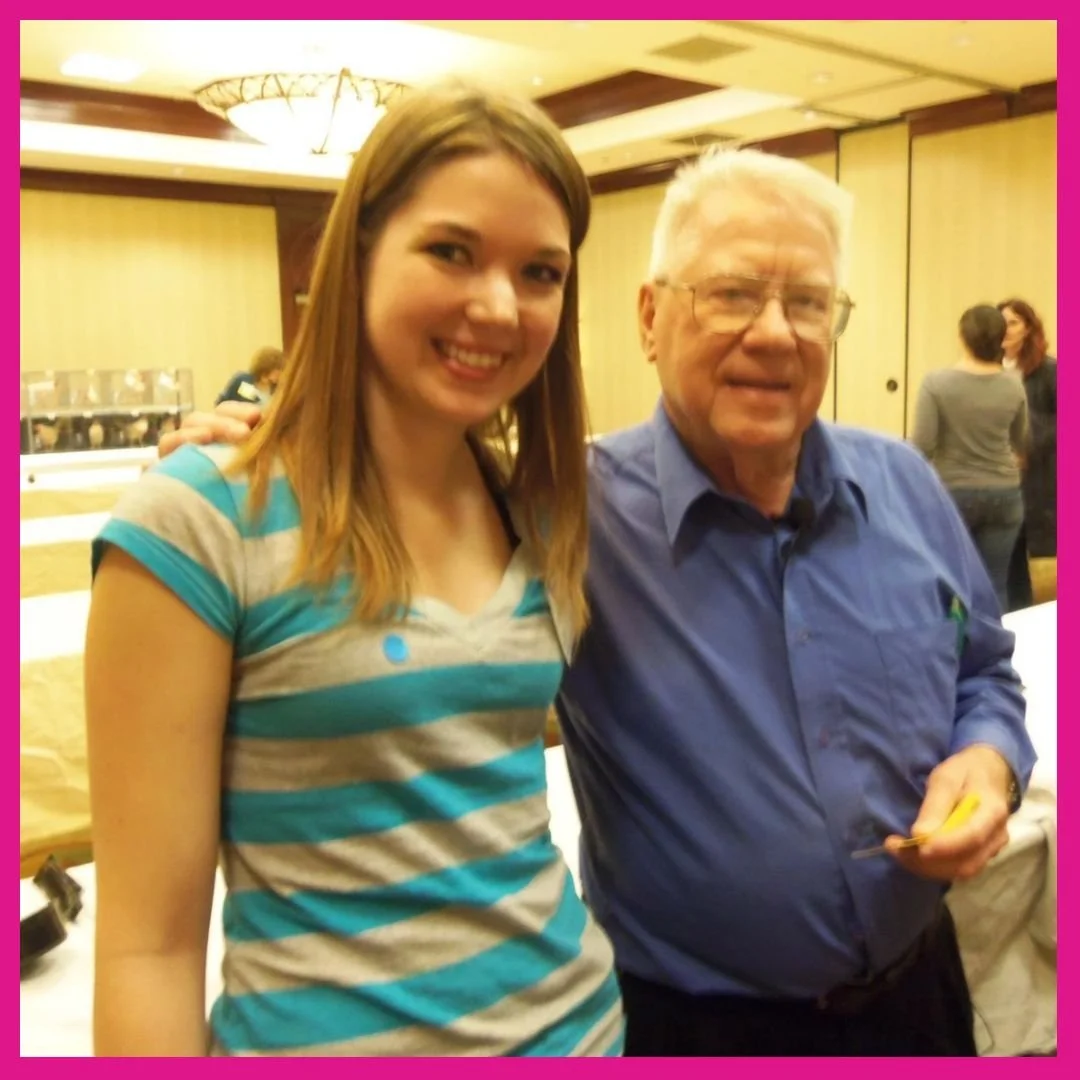
Melissa Viera and Bob Bailey (2013)
The first time I read Don't Shoot the Dog by Karen Pryor, I was amazed. If you’re not familiar with it, it’s considered one of the foundational books on reward-based training, and it’s about much more than dogs. Suddenly, all of those silly games I had grown up playing with my pets fit into a framework. There was a science behind what fascinated me.
The thing I’ve experienced in every training session I’ve ever had, from my childhood pets to the dogs I work with today, is that you have to listen and observe far more than you train. I spend a lot of time working on my own skills as a trainer. It’s something I’ll never stop doing. I watch videos of my sessions to study my movements and reward placement. I read research on how animals learn. I watch other trainers. I schedule time with mentors. But we also have to learn from the animal. You can have every technical detail right, down to the way you move when delivering a treat, but none of it matters if you aren’t paying attention to what the animal is telling you.
I’ve watched training sessions fall apart because someone became so focused on training the dog that they stopped paying attention to how the dog was responding. With other species, that mistake is often easier to recognize. It’s difficult to criticize a chicken or a rabbit the way people sometimes criticize their dogs. Instead, you naturally begin watching the animal and adjusting your own behavior. With dogs, many people immediately begin giving “commands”. When the dog doesn’t respond, they assume the dog is being stubborn. More often than not, that isn’t what’s happening.
What might you notice if you slow down and really pay attention?
Try this. Call your dog over and wait for eye contact. When your dog looks at you, say "good" and take a step backward. Wait for eye contact again and repeat. After several repetitions, turn away and see if your dog quickly comes around to find your face again. Don’t use any treats.
The point isn't about the results of the exercise. The point is that your own curiosity about what your dog will do encourages you to observe more closely. You not knowing what to expect, hopefully made you notice more.
So why do so many serious trainers work with other species? I think the answer goes beyond improving mechanics. Training another species activates curiosity. It forces you to observe and to appreciate that every training session is a conversation. You can accomplish this with the dog sitting with you on the sofa right now. Every time you train, be curious. Be excited to have a conversation with your dog and discover what you can learn from each other.
Sometimes the greatest lesson another animal teaches us isn't about training at all, it's about our own level of focus. I wasn't thinking about Bob Bailey standing over my shoulder while training a chicken, just like I’m not thinking about my inbox or anything else while training a dog.
